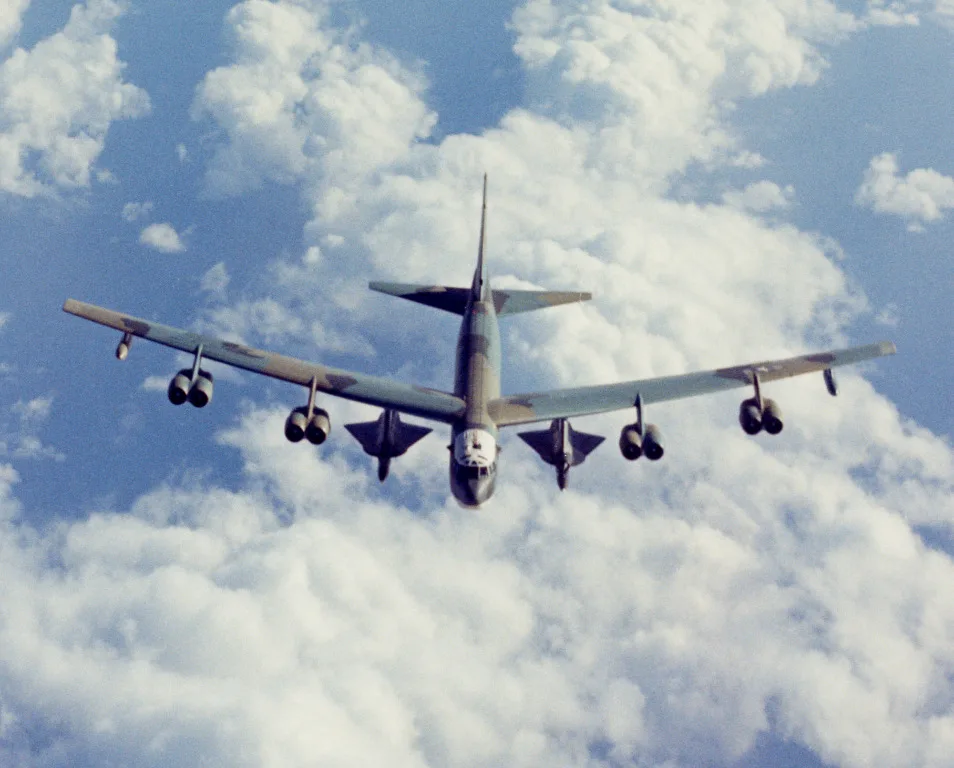
Overview
The B-29 was the most advanced bomber of the Second World War, with a pressurised cabin and remote-controlled gun turrets. It was the most expensive US weapons project of the war, costing more than the atomic bomb itself, and two B-29s, Enola Gay and Bockscar, dropped the atomic bombs on Hiroshima and Nagasaki in 1945.
In August 1944, B-29s flew from China Bay near Trincomalee in Ceylon to bomb oil refineries at Palembang in Sumatra, one of the longest bombing missions of the war.
Specifications
Dimensions
| Length | 30.18 m |
|---|---|
| Wingspan | 43.05 m |
| Height | 8.46 m |
| Wing area | 161.3 m² |
Weights & fuel
| Empty weight | 33,800 kg |
|---|---|
| Max. take-off weight | 60,560 kg |
Performance
| Max. speed | 574 km/h |
|---|---|
| Cruise speed | 350 km/h |
| Range | 5,230 km |
| Ferry range | 9,000 km |
| Service ceiling | 9,710 m |
Crew & capacity
| Crew | 11 |
|---|
Powerplant
| Engines | 4 |
|---|---|
| Engine model | Wright R-3350-23 Duplex-Cyclone |
| Power (each) | 1,640 kW |
Figures are compiled from public sources and may be approximate; they can vary by variant and configuration.
Armament
- 10–12 × 12.7 mm machine guns in remote turrets, plus a 20 mm cannon in early tails
- Up to about 9,000 kg of bombs
Did you know?
The Soviet Union copied interned B-29s rivet by rivet to create the Tupolev Tu-4.
Photos
No photos yet